7 posts tagged with "AWS"

View All Tags

AWS re:Invent 2025: Key Insights for Research and Cyberinfrastructure

· 4 min read
Arpita Patel
Assistant Director of DevOps and IT
Scott Hendrickson
Sr Solutions Architect WWPS Education at AWS
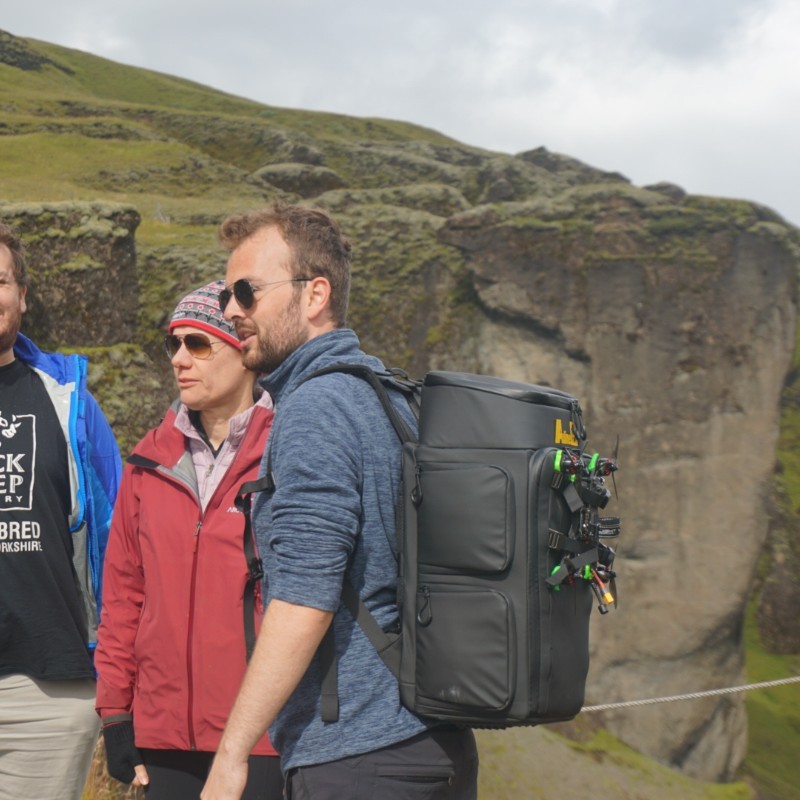
A photo from AWS re:Invent 2025

AI, DevOps and the Future of Cloud Infrastructure

AWS re:Invent did not disappoint! I spent the first week of December at Amazon Web Services' flagship conference in Las Vegas. The event delivered cutting-edge technical insights, showcased the rapid evolution of cloud computing and AI, and provided countless opportunities to connect with industry leaders.

The energy across all five conference venues was more vibrant than I ever imagined it would be.

The Central Theme: AI and Agentic AI

Unsurprisingly, the hottest topics throughout the conference were AI and Agentic AI. From keynote sessions to hands-on demos, the focus was on real-world applications, responsible AI development, and the next frontier of autonomous systems. Seeing how organizations are leveraging AI to create value sparked new ideas for advancing research infrastructure.

However, an important reality: security remains paramount. As Agentic AI systems grow more capable, robust security frameworks will be essential to ensure trust and stability.

A Developer and DevOps Paradise

Photos from AWS re:Invent 2025

As a first-time attendee of AWS re:Invent, I was amazed by the work showcased during this conference! The conference showcased new ways to develop and bring ideas from concept to production-scale prototypes. As AWS CEO Matt Garman said in his keynote: "Why not?" That spirit of possibility and rapid innovation was there throughout the week. For those who missed it, I highly recommend watching the rapid-fire announcements from Matt’s keynote here: AWS re:Invent 2025 Keynote.

The keynotes from both the CEO and Dr. Swami Sivasubramanian were insightful. AWS is making strategic moves that are fundamentally changing how we deploy applications on the cloud—making workloads more cost-optimized and efficient. For CIROH, where we manage a hybrid infrastructure across multiple cloud platforms and on-premises, these insights are directly applicable to our ongoing efforts to democratize access to computational resources while managing costs effectively.

Community Connections

One of my favorite experiences was attending the AWS Community Builder Hub. As a member of the AWS Community Builders program, I had the privilege of connecting with others working with AWS. The group was warm, welcoming, and incredibly insightful. Everyone I spoke with shared advice and perspectives that left me feeling both energized and supported.

I also got a chance to meet Jason Dunn in person—a great leader in sharing AWS content and community knowledge! These personal connections remind me why community-driven initiatives are so powerful.

Key Takeaways for Research Cyberinfrastructure

The pace of technological advancement is staggering—tasks that once took months can now be completed in days thanks to AI, GenAI, and agent-based systems. But speed brings responsibility: security must scale with innovation.

The conference highlighted several critical areas:

  • Cloud cost optimization & Storage innovations: Check out AWS Graviton5 Processors for HPC Workloads (could be a fit for those hydrological modeling workflows) and Amazon S3 Express One Zone for Research Data (great for frequently accessed datasets with new cost savings).
  • Developer velocity: Lambda Durable Functions could simplify some of your long-running pipelines, and the new AI-powered workflow design for Step Functions makes building orchestrations much faster. You can use natural language to do this, so it starts to democratize Step Function development. You don't need to be a developer to use it.
  • DevOps tooling: CDK Pipelines v2 with AI-Assisted Development has some cool features for infrastructure-as-code that could speed up your deployment cycles.
  • Observability: Amazon CloudWatch AI-Powered Anomaly Detection, especially the cost anomaly detection feature, seems like a must-have for grant-funded budgets—it'll alert you when spending patterns deviate unexpectedly.

These developments reinforce CIROH’s hybrid approach—combining cloud scalability, collaborative computing, and on-premises HPC infrastructure-to stay ahead of the curve.

Learn More

For deeper insights into AWS re:Invent 2025 announcements, check out these resources:

Moving Hydrologic Prediction Forward — A software integration meeting at the Alabama Water Institute

· 10 min read
Martyn Clark
Professor of Hydrology at University of Calgary
James Halgren
Assistant Director of Science
Matthew Denno
Senior Engineering Applications Developer at RTI International
Arpita Patel
Assistant Director of DevOps and IT
Josh Cunningham
Software Engineer
Quinn Lee
Programmer Analyst
Sam Lamont
Environmental Applications Developer at RTI International
Darri Eythorsson
Postdoctoral Researcher at University of Calgary
Cyril Thebault
Postdoctoral Associate at University of Calgary
Sifan A. Koriche
Research [Hydrologic] Scientist
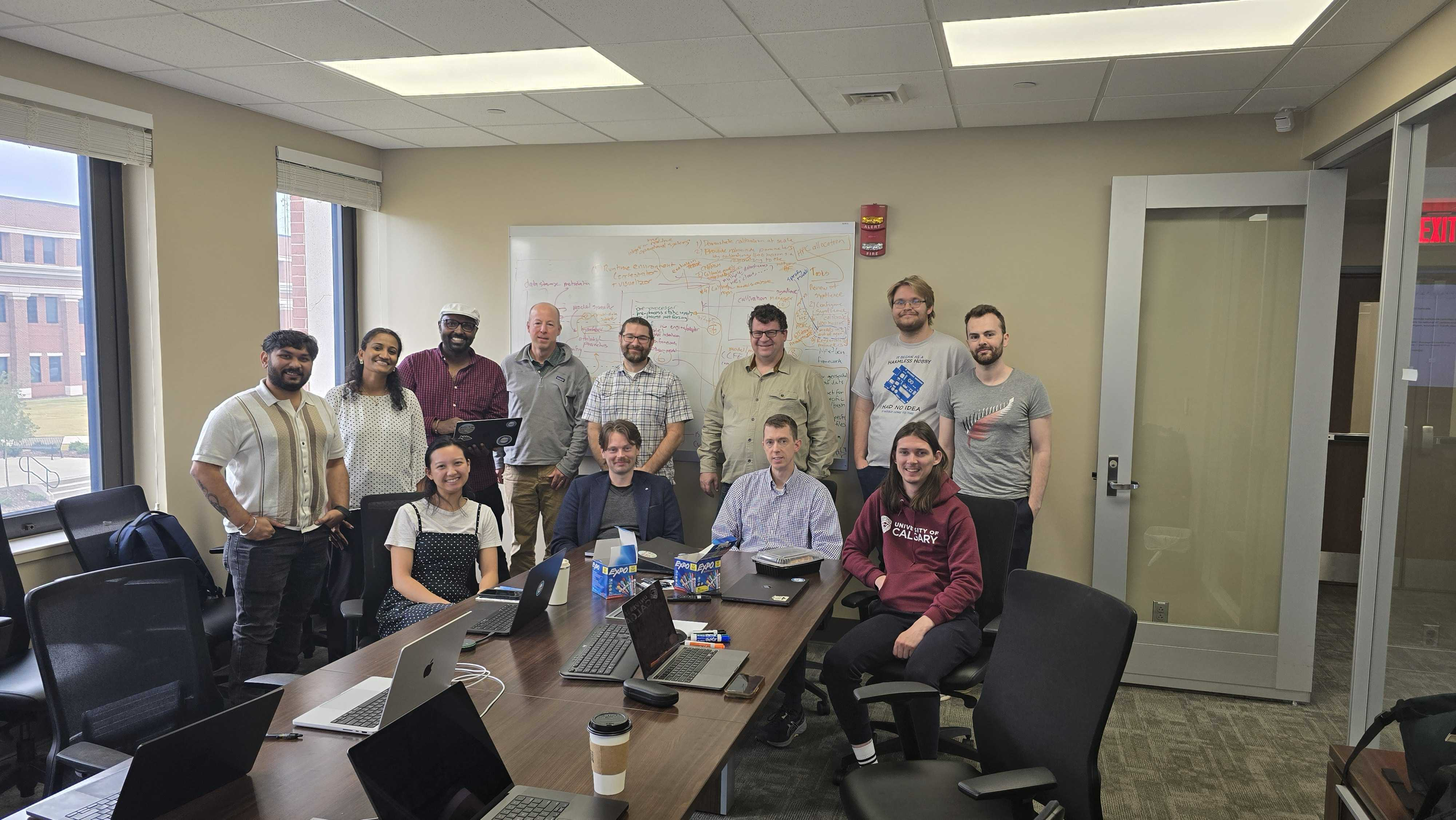
Group photo from the software integration meeting at the Alabama Water Institute

Last week, at the invitation and expert coordination of James Halgren, teams from RTI International (Sam Lamont and Matt Denno) and the University of Calgary (Darri Eythorsson, Cyril Thebault, and Martyn Clark) met at AWI for an intensive working session focused on weaving recent CIROH research into AWI’s fork of the NOAA Office of Water Prediction (OWP) Next Generation Water Resources Modeling Framework (nicknamed “NextGen”). James took the lead in developing the agenda, lining up the right scientific and technical expertise and ensuring that the week targeted the most critical software integration challenges. Throughout the visit, the RTI and UCalgary teams collaborated closely with AWI software engineers Quinn Lee, Josh Cunningham, hydrologic scientist Sifan A. Koriche, and James himself. The days were filled with whiteboards, deep technical conversations, and strategic planning around the future of NextGen water prediction. This recap captures the key themes and the momentum that carried through the week.

DevCon 2025: A DevOps and Cyberinfrastructure Success Story

· 3 min read
Arpita Patel
DevOps Manager and Enterprise Architect

The recent DevCon 2025 event showcased not just cutting-edge development practices, but also demonstrated how modern DevOps principles and cloud infrastructure can seamlessly support large-scale technical workshops. Our team had the privilege of providing IT infrastructure and support for over 200 attendees, creating a robust learning environment through an exemplary public-private partnership.

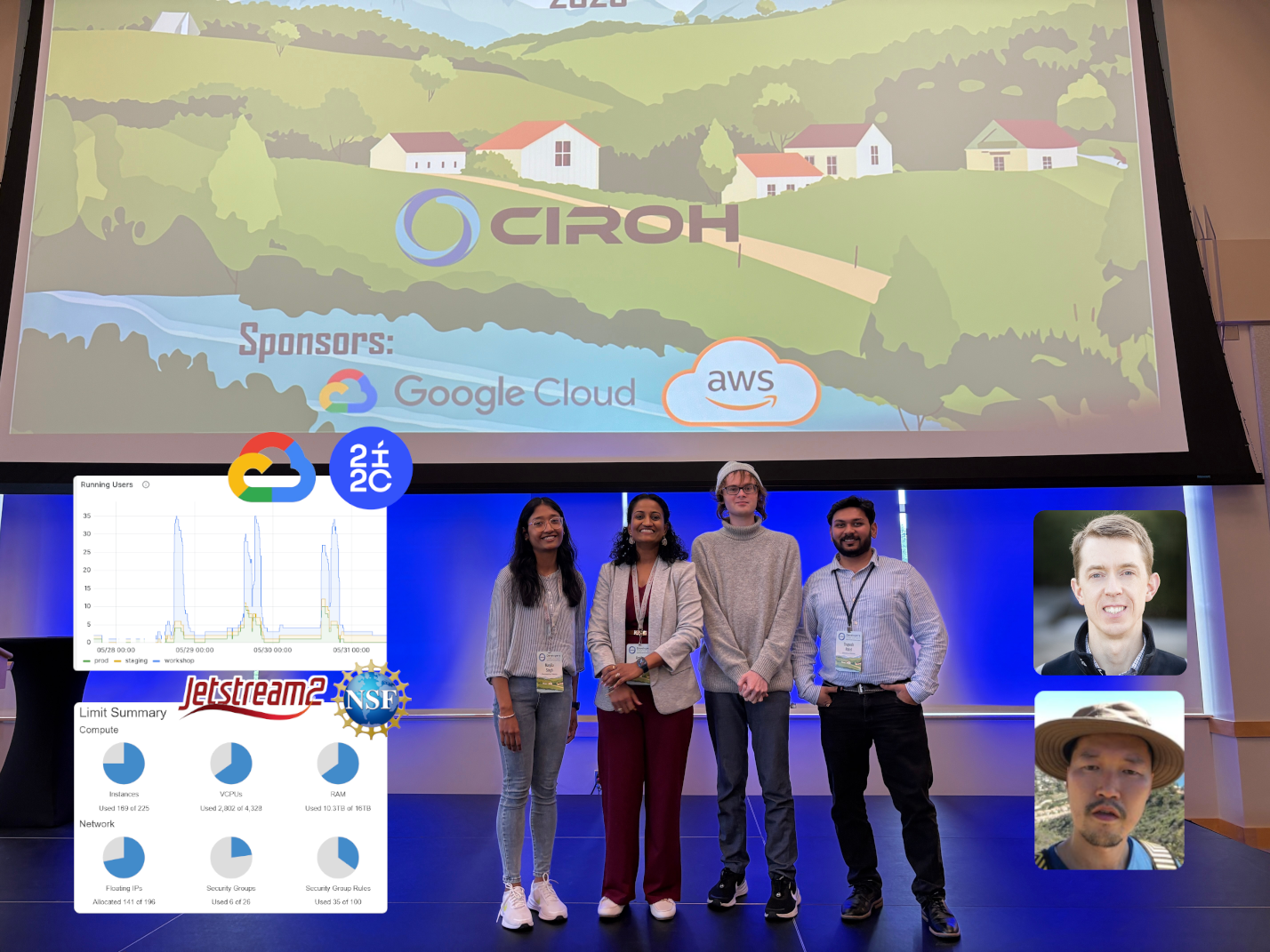
Image of CIROH's Research Cyberinfrastructure and DevOps team. On the left, two graphs are shown depicting usage for the Google Cloud-2i2c and Jetstream2 environments.

CIROH's Research Cyberinfrastructure and DevOps team.
Left to right, top to bottom:
Manjila Singh, Arpita Patel, Nia Minor, Trupesh Patel, James Halgren; Benjamin Lee.

DevCon 2025: Hydroinformatics and Research CyberInfrastructure Keynote

· 5 min read
Arpita Patel
DevOps Manager and Enterprise Architect

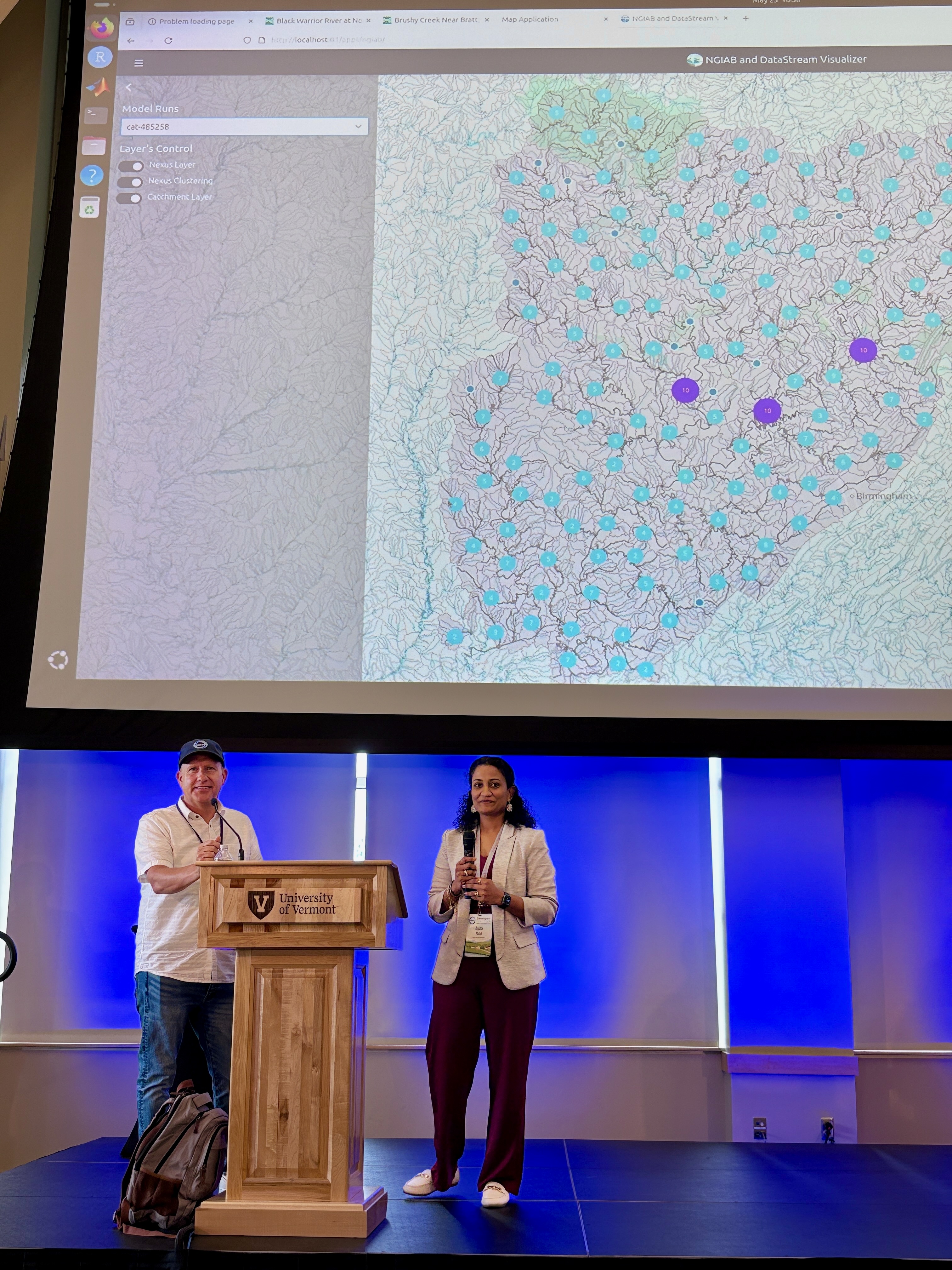
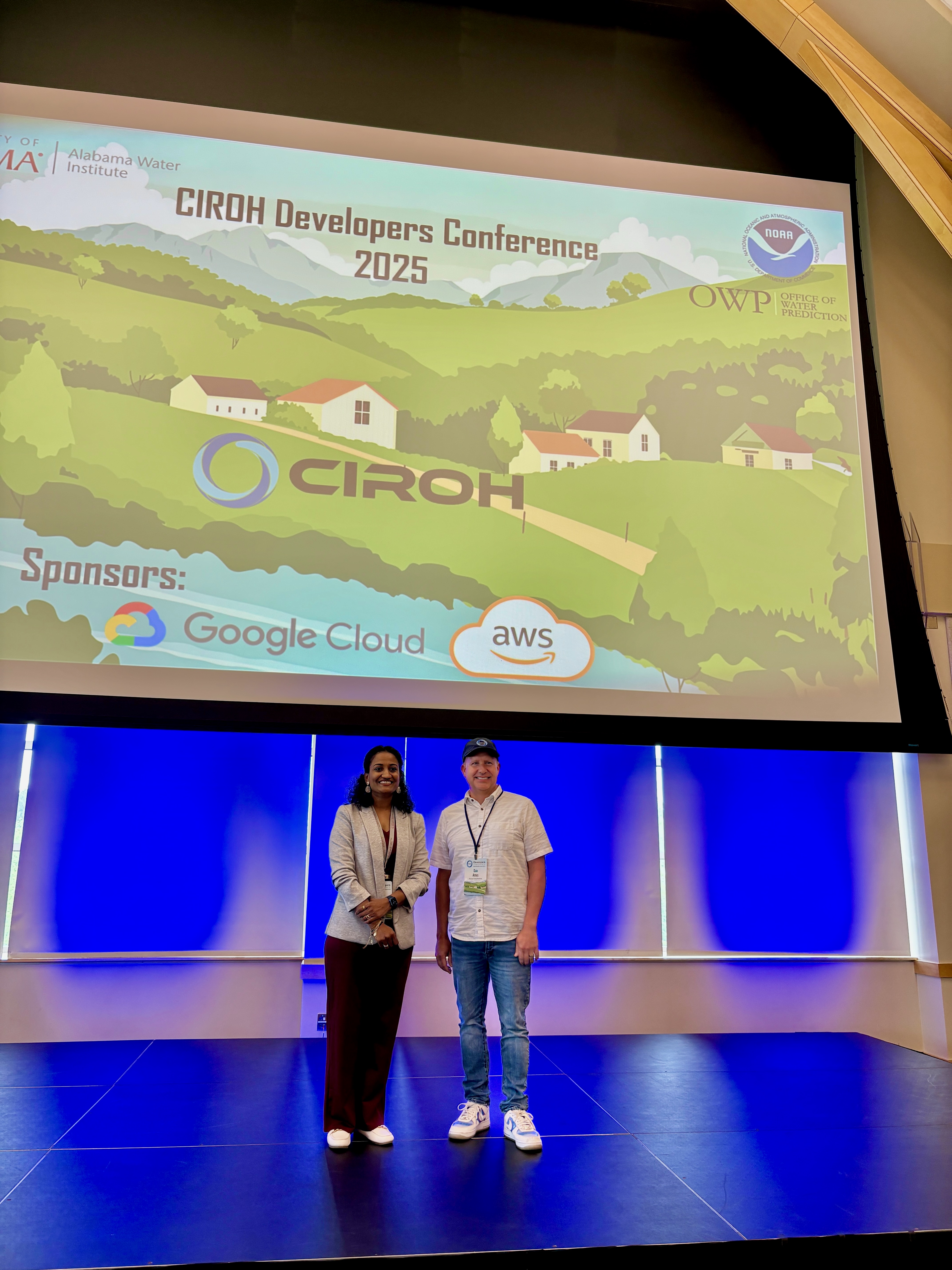
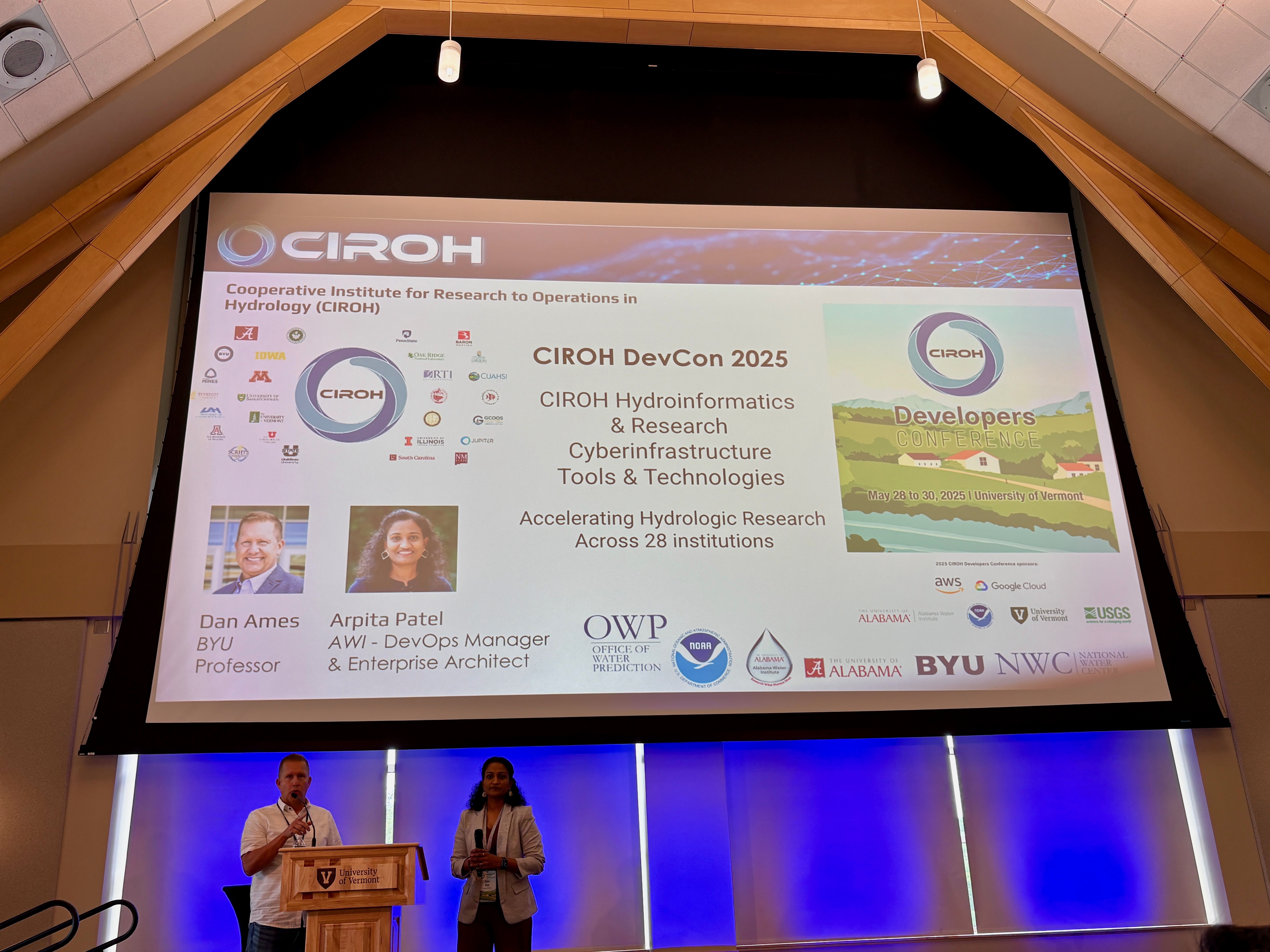
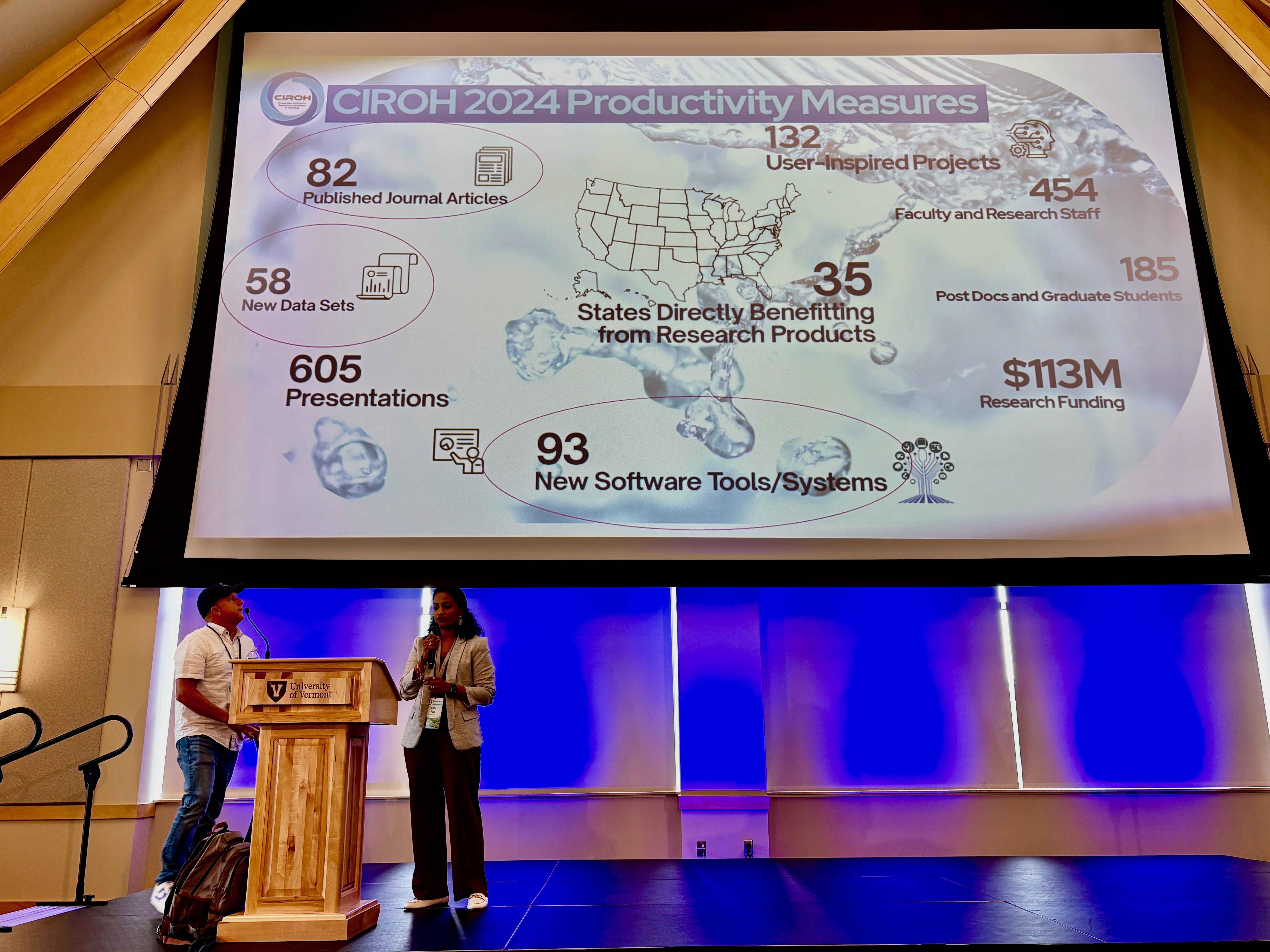
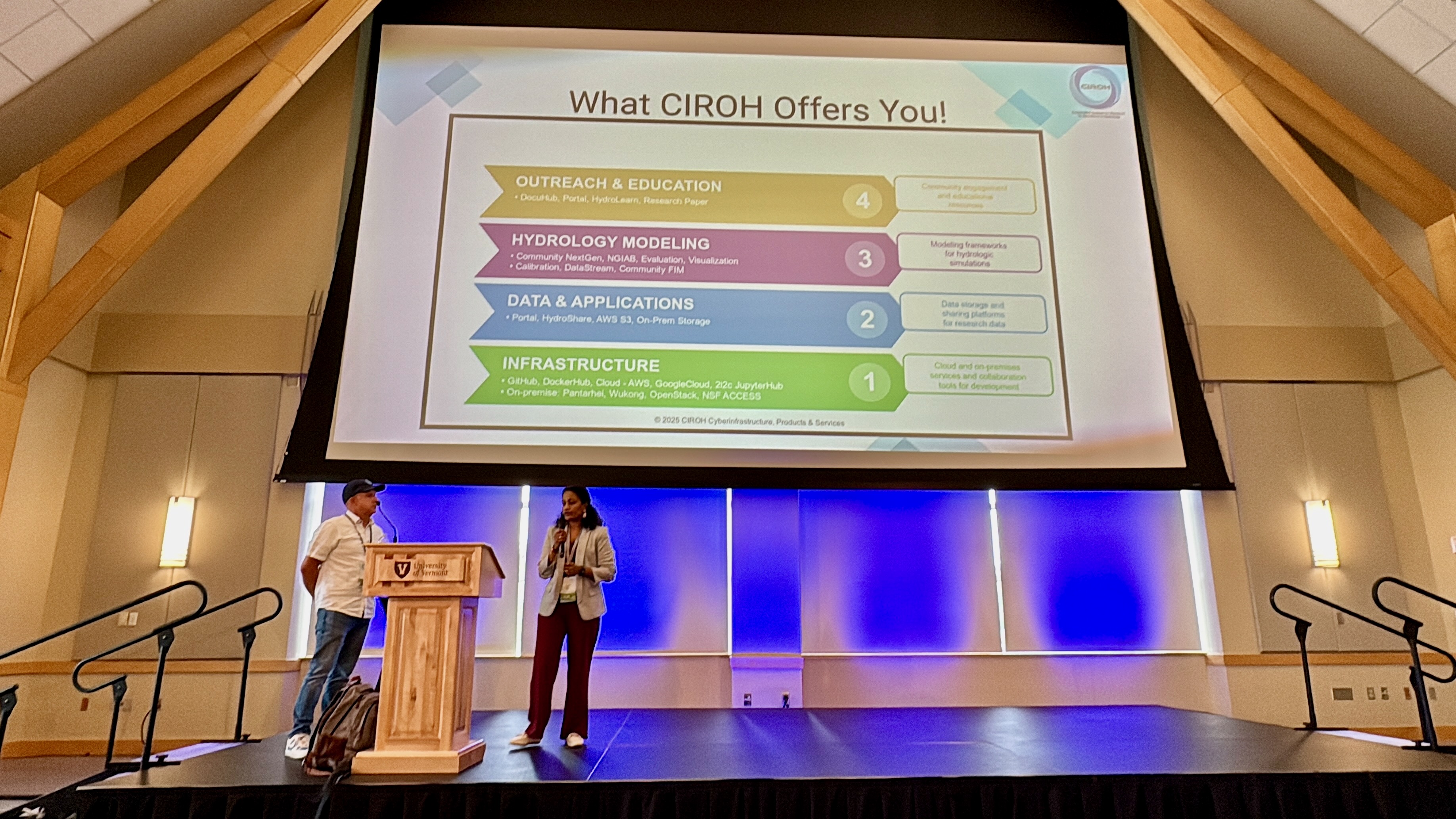
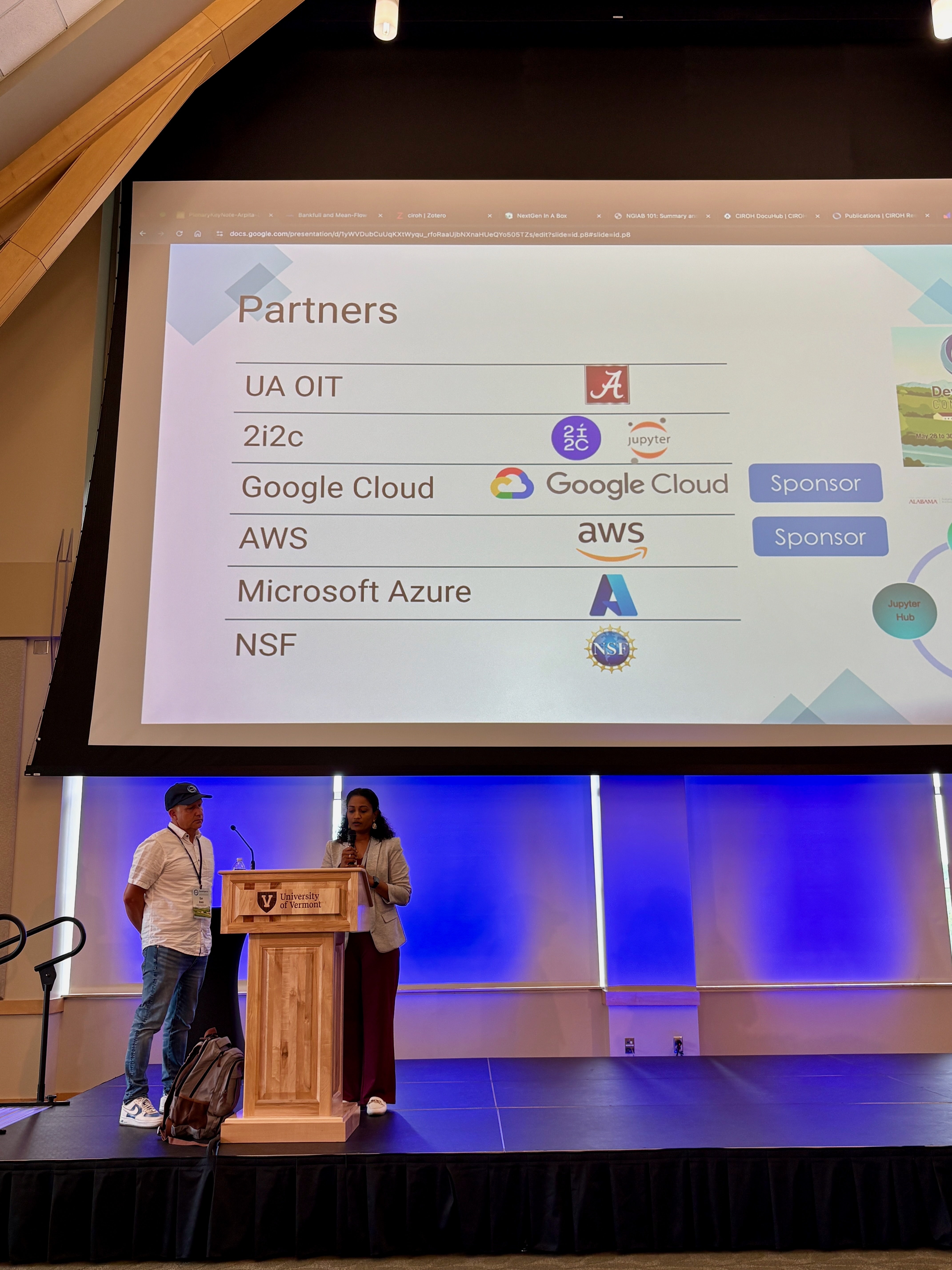
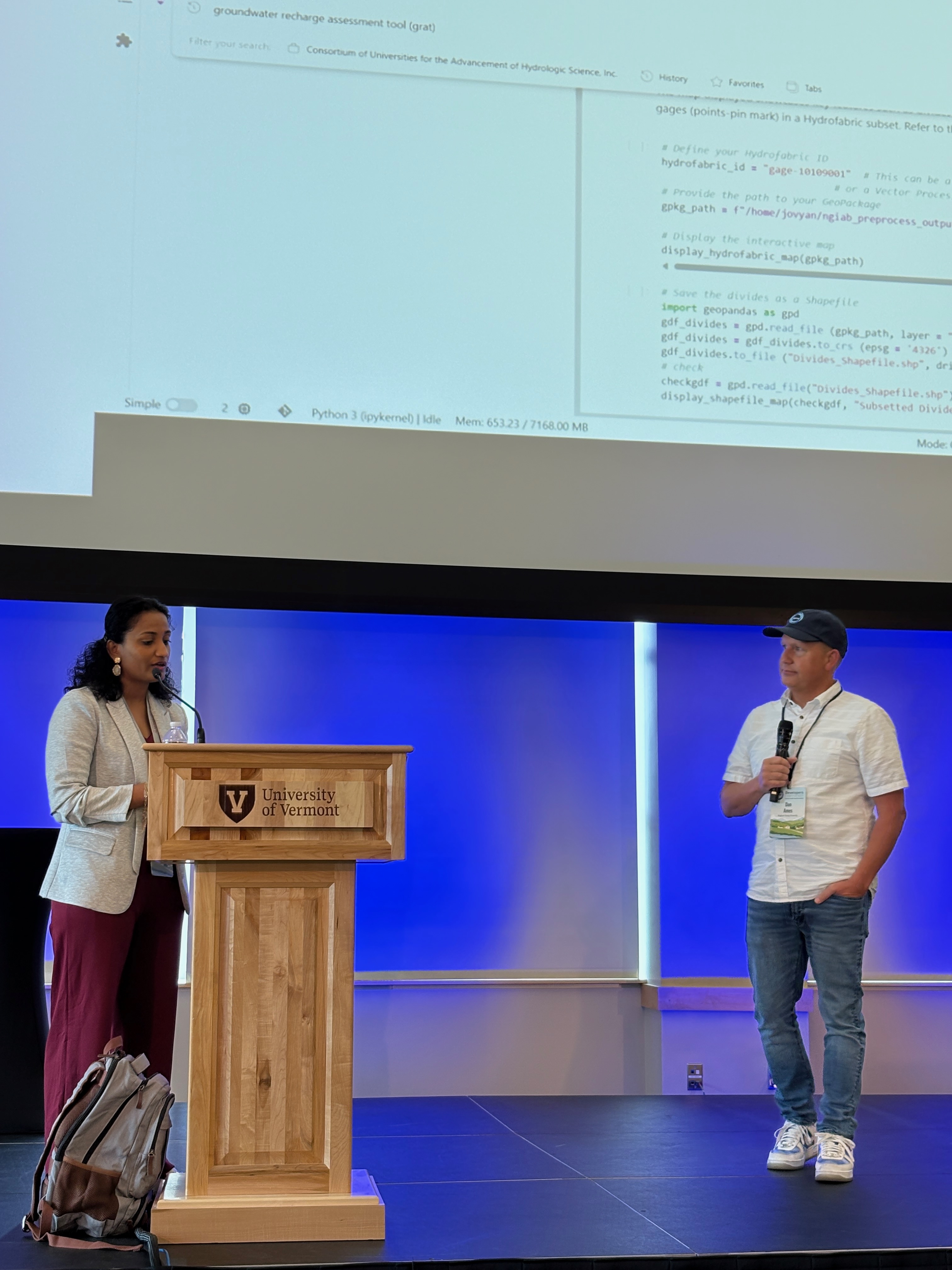
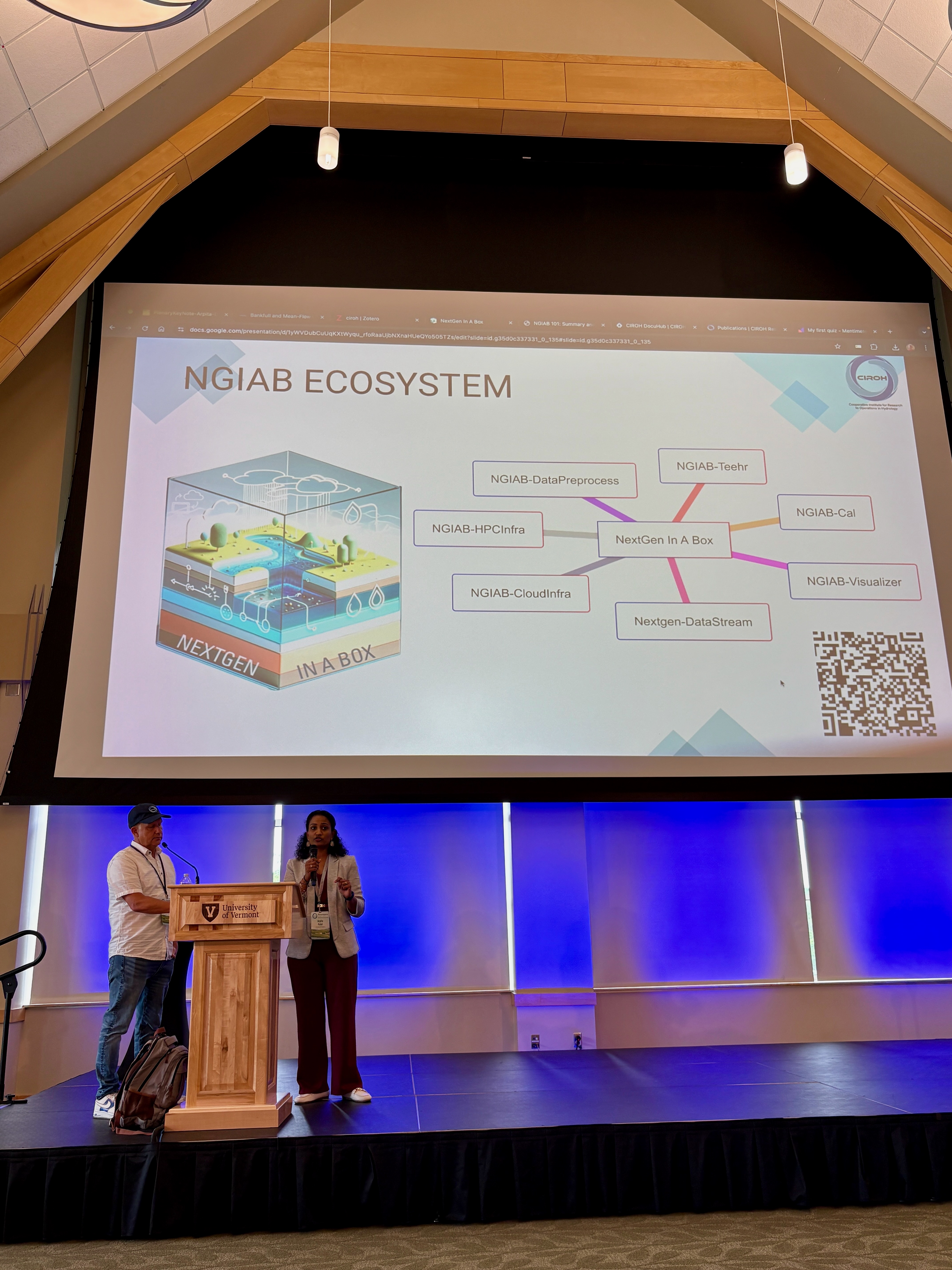
Last week, I had the incredible opportunity to co-present a keynote at the CIROH Developers Conference (DevCon 2025), which attracted over 200 attendees. This presentation, which I presented alongside Dan Ames, focused on "CIROH HydroInformatics and Research Cyberinfrastructure." It was a fantastic experience to share insights into the powerful tools and technologies that CIROH engineers, students, researchers have been developing to advance hydrological research and operations.


Pennsylvania State University Researchers Leverage CIROH Cyberinfrastructure for Advanced Hydrological Modeling

· 3 min read
Arpita Patel
DevOps Manager and Enterprise Architect
Yalan Song
Research Assistant Professor
Tadd Bindas
Graduate Researcher

Pennsylvania State University (PSU) researchers have been leveraging CIROH Cyberinfrastructure to tackle complex hydrological modeling challenges. This post highlights their innovative approach using the Wukong computing platform in conjunction with Amazon S3 bucket storage to efficiently process and analyze large-scale environmental datasets. 🚀

CIROH Cloud User Success Story

· 3 min read
Arpita Patel
DevOps Manager and Enterprise Architect

This month, we are excited to showcase two case studies that utilized our cyberinfrastructure tools and services. These case studies demonstrate how CIROH's cyberinfrastructure is being utilized to support hydrological research and operational advancements.

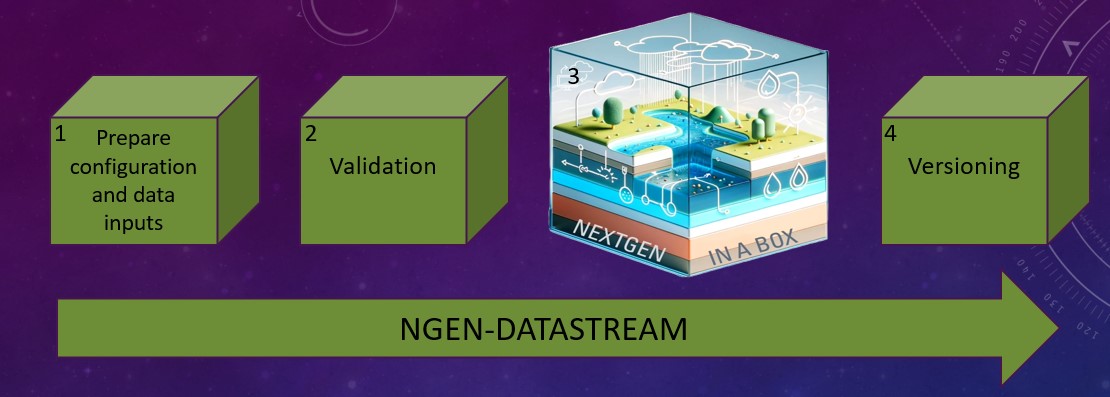
1. ngen-datastream and NGIAB

ngen-datastream image

CIROH Research CyberInfrastructure Update

· 2 min read
Arpita Patel
DevOps Manager and Enterprise Architect

We're excited to share some recent developments and updates from CIROH's Research CyberInfrastructure team:

Cloud Infrastructure

  • CIROH's Google Cloud Account is now fully operational and managed by our team. You can find more information here.
  • We're in the process of migrating our 2i2c JupyterHub to CIROH's Google Cloud account.
  • We've successfully deployed the Google BigQuery API (developed by BYU and Google) for NWM data in our cloud. To access this API, please contact us at ciroh-it-admin@ua.edu. Please refer to NWM BigQuery API to learn more.